
Learn practical and compassionate ways to respond when asked for money on the street.

Feeling awkward when someone asks you for money on the street is a common experience. Whether it’s genuine need or a questionable situation, knowing how to respond can help you handle the encounter gracefully. Here are 7 smart ways to manage these moments without guilt or discomfort while staying true to your values.
1. Politely decline and offer a kind word if you’re uncomfortable giving money.
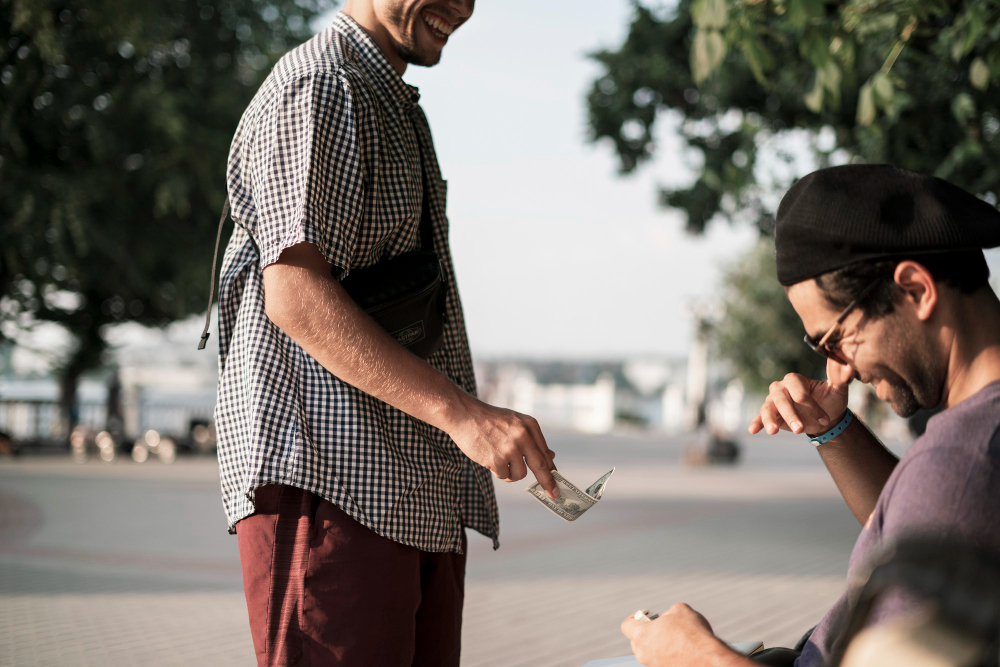
If you decide not to give money, a polite and kind response can ease the situation. Saying something like, “I’m sorry, I can’t help today,” while maintaining eye contact shows respect without engaging further. Adding a kind word, such as “Take care” or “Good luck,” acknowledges their humanity and softens the rejection. This approach allows you to set boundaries without feeling dismissive or guilty, ensuring a respectful interaction even when you choose not to give.
2. Carry small essentials to give instead of cash if you want to help.

Carrying small, useful items like granola bars, water bottles, or hygiene kits can be a thoughtful alternative to giving cash. These items address immediate needs while eliminating concerns about how money might be used. Keeping a few essentials in your bag ensures you’re prepared to help when approached. Many recipients appreciate the gesture, and this strategy allows you to assist in a meaningful way without the potential discomfort of giving money directly.
3. Donate to local organizations to support those in need in a structured way.

Supporting local charities or organizations can provide a sustainable way to help people in need. These groups often have the resources and expertise to address homelessness, hunger, and other challenges effectively. When someone asks for money on the street, you can explain that you donate regularly to a specific cause. This explanation can show you care while redirecting your efforts toward a reliable system that maximizes your contributions’ impact. It’s a compassionate and practical solution.
4. Acknowledge the person’s humanity by engaging briefly and respectfully.

Taking a moment to acknowledge someone who asks for help can have a profound effect, even if you don’t give money. A smile, nod, or brief greeting like “I hope things improve for you” can validate their existence and dignity. Many people experiencing hardship feel invisible, so even small acts of kindness can make a difference. This respectful interaction creates a positive connection while allowing you to remain firm in your decision not to give.
5. Set boundaries in advance to avoid feeling pressured in the moment.

Planning ahead can reduce stress when approached for money. Decide on your personal policy—whether you’ll give cash, offer alternatives, or politely decline—and stick to it. Having a plan prevents hesitation or guilt in the moment, allowing you to respond with confidence. For example, you might choose to always carry small essentials or support organizations instead of individuals. By setting clear boundaries, you can stay consistent, reduce awkwardness, and handle these encounters in a way that aligns with your values.
6. Consider giving small change to help without overcommitting financially.

If you’re comfortable giving money, offering small change or a low-denomination bill can provide assistance without straining your budget. Keeping a few coins or dollar bills readily accessible makes it easier to respond quickly and with purpose. This approach allows you to help someone in need without overextending yourself financially. Even a small amount can make a difference and help you feel good about your contribution while maintaining control over your giving practices.
7. Trust your instincts and respond in a way that feels right for you.

Every situation is unique, and trusting your instincts is essential when deciding how to respond. If you feel safe and inclined to help, follow through in a way that feels genuine, whether it’s offering money, essentials, or kind words. If the situation feels uncomfortable or unsafe, it’s okay to walk away or decline politely. Trusting your judgment ensures that your response is authentic and aligns with your values while maintaining your personal safety and comfort.