

Imagine someone handing you a check just for unpacking your suitcase. Sounds ridiculous, right? Yet around the world, governments are doing exactly that – or at least something very close to it. Struggling with population decline, aging communities, and ghost-town villages, they’re dangling financial incentives to get fresh faces through the door.
The idea has exploded in popularity, with viral headlines promising free cash, tax breaks, and even homes for a euro. But here’s the thing: the reality is almost always more complicated than a click-bait headline lets on. The money is real. The conditions, however, can be quite brutal.
1. Italy – Cash Grants for Empty Villages and a Powerful Tax Regime

Italy is arguably the global poster child for this kind of relocation incentive. Italy’s birth rate sits at just 1.3 children per woman, well below the 2.1 needed to maintain a stable population. The result? Dozens of picturesque villages slowly emptying out, with crumbling buildings and shuttered piazzas where life once thrived.
The scenic region of Calabria offers around €28,000 to qualifying individuals willing to move to one of nine villages with a population of fewer than 2,000. Molise, the region east of Rome, pays people €700 per month for up to three calendar years – a maximum of roughly $27,000 – to those who move to villages of 2,000 residents or fewer and open a business there.
On the tax side, things get even more interesting. Italy’s Inbound Tax Regime offers a 50% income tax exemption for five years, rising to 60% if the beneficiary has at least one minor or adopted child resident in Italy, and applies up to an annual income cap of €600,000.
Italy’s main relocation tax incentive is the newly reformed Impatriati Regime, which entered into force in 2025 and is significantly more selective than its predecessors. The catch: to apply for many village grants, you must be no older than forty, move within 90 days of acceptance, and either start a new business that benefits locals or fill an in-demand job. So, it’s not simply a reward for showing up – you have to earn it.
2. Japan – Rural Relocation Grants Worth Up to ¥3 Million

Japan’s birth rate is falling at an alarming rate – 2025 saw around 670,000 babies born, the lowest since records began in the late 1800s, far lower than the highs of two million new births in the 1970s. The government’s response has been one of the most structured relocation programs anywhere on the planet.
The Japanese government will pay families up to ¥3,000,000 – roughly $20,000 USD – to leave Tokyo and move to the countryside. This is an active, funded national initiative that has been expanding every year since its launch. As of 2025, over 1,300 municipalities are enrolled in the program.
People living alone receive up to ¥600,000, while households get up to ¥1 million each, with an additional ¥1 million disbursed for each member of a household under the age of 18. Families with multiple children can receive a genuinely life-changing sum.
The catch here is hard to overlook. The five-year residency requirement works both ways: applicants must have lived in Tokyo for five years and commit to five years in the destination. Leaving the municipality within five years triggers full repayment of the grant, with no proration and no exceptions. Commit or pay it all back. That’s as black and white as it gets.
3. Greece – Mediterranean Living With a Stunning Tax Discount

Greece rarely comes up in conversations about financial innovation, but its relocation incentives are genuinely impressive. Greece’s government actively encourages foreign professionals, pensioners, and investors through tax incentives, including a 50% income tax reduction for seven years for those who relocate and work in Greece, and a flat 7% tax rate for foreign pensioners.
Despite its stunning islands, ancient ruins, and Mediterranean weather, Greece is a European nation grappling with population decline. To address this, the country has introduced various incentives to attract new residents. Some individual islands have gone further than just tax breaks.
The island of Antikythera, for example, has provided free housing, food, and a monthly stipend of $542 to families with three or more children to facilitate their relocation. That sounds extraordinary – and it was, briefly.
The catch here is important: one of the most exciting options still listed on dozens of websites was the Greek island of Antikythera – but the Greek Orthodox Church’s program on that island no longer exists. Always verify before you book that one-way ticket. The tax incentives, however, remain active and well worth exploring for the right candidate.
4. Switzerland – Alpine Dreams With an Expensive Entry Ticket
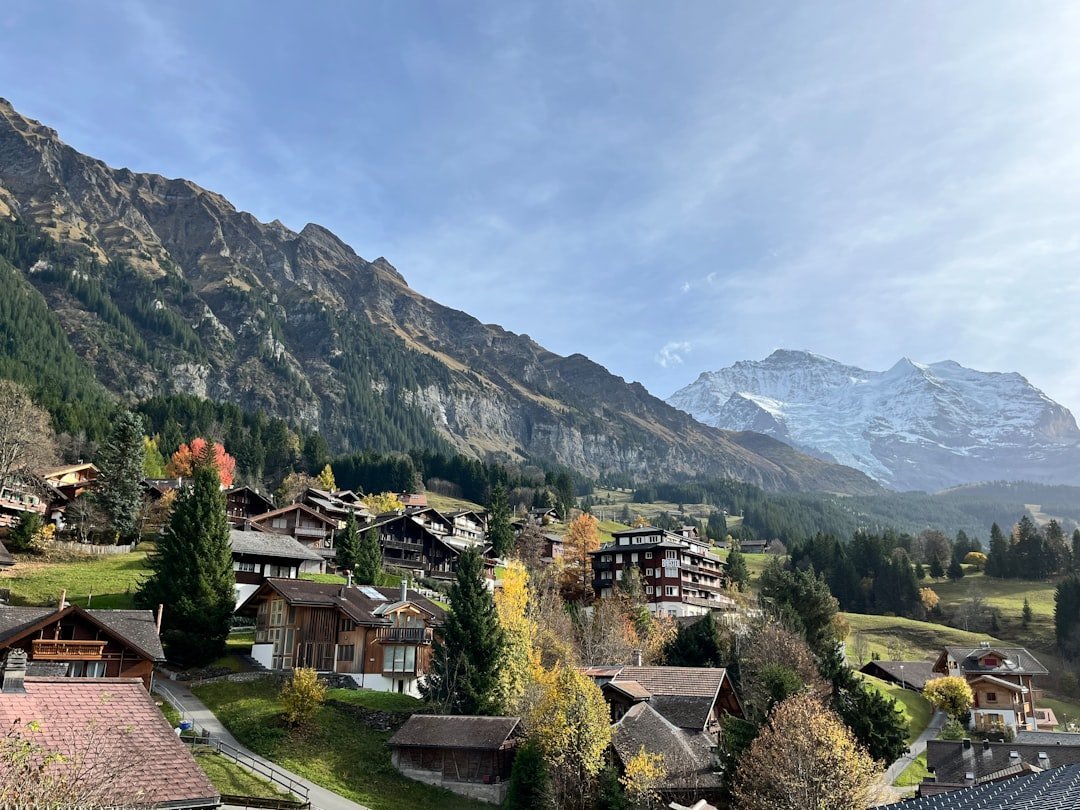
Switzerland is one of the most talked-about relocation destinations in this category, and the numbers sound almost too good to be true. The picturesque village of Albinen has been experiencing a decline in its young population and is offering 25,000 Swiss francs – about $28,000 – per adult and an additional 10,000 francs per child to new residents.
Places like Albinen attract families with financial incentives to help keep schools, local traditions, and community life intact. It’s a genuine village-saving operation dressed up as a financial opportunity. Honestly, there’s something almost poetic about it.
However, you must be under 45, commit to staying for at least 10 years, and invest a minimum of 200,000 francs in property. That’s the sting: the entry cost is enormous. Think of it less as getting paid and more as getting a partial rebate on a very expensive move.
To qualify for the program, you must be a Swiss citizen or hold a permanent residency permit. That alone eliminates most international applicants from the start. Still, for Swiss nationals or permanent residents looking to escape city prices and embrace mountain life, the math can eventually work out in your favor.
5. Spain – Village Incentives and a Startup-Friendly Framework

Spain’s “Empty Spain” problem – called España vaciada in Spanish – is very real. Dozens of Spanish villages, from Galicia to Castilla y León, offer housing incentives and business subsidies to attract new residents, with some towns offering free housing or land for those willing to open shops or restaurants.
The Ponga region in northern Spain gives €3,000 to couples who move there and stay for at least five years, plus an additional €3,000 for each child. This initiative aims to boost the population of this small region, which currently has fewer than 1,000 residents.
Spain’s State Plan for Access to Housing, running until 2025, includes a notable incentive for young people: if you’re under 35, you could get direct aid of up to €10,800 toward buying a home in an abandoned village. The property must be in a municipality with fewer than 10,000 inhabitants, its price can’t exceed €120,000, and your annual income must be below a certain threshold. If you get the grant, you must use the house as your main residence for at least five years.
The Spanish government also funds startup grants for digital nomads under its Startup Law, encouraging remote professionals to relocate. So whether you’re a young couple, a remote worker, or someone with an entrepreneurial itch, Spain has a flavor of incentive worth investigating.
6. Ireland – Over €80,000 for a Remote Island Life

Ireland may be the most dramatic offer on this entire list. The numbers being thrown around are genuinely staggering. Ireland has launched a scheme which pays generous cash incentives to people who choose to move to one of the nation’s offshore communities, as part of the “Our Living Islands” policy to boost the population of Ireland’s islands.
As part of the project, Ireland’s government will pay over €80,000 to new residents of offshore communities. The scheme aids communities on 30 islands not linked to the mainland by bridges and cut off by the tides. That last part is what gets most people – these are genuinely isolated, windswept places.
There are rules regarding the use of the cash once granted. The money can be used for building work such as installing insulation, structural improvements, and redecoration. It’s not a lifestyle stipend – it’s a renovation grant. The property you’re restoring needs to be in serious need of work.
Enterprise Ireland, a government organization, has also created a separate program to attract expat entrepreneurs from around the globe. If your startup has potential and you apply, approved businesses can receive thousands of euros in funding and tax credits upon relocating to Ireland. This also grants access to the European Union market, one of the largest in the world. Two very different paths, both with real money attached.
7. Portugal – Revamped Tax Regime and Interior Relocation Grants

Portugal spent years as the darling of the expat world thanks to its Non-Habitual Residency tax regime. That era has now closed. On January 1st, 2025, the NHR officially ended and was replaced by the IFICI Portugal tax regime, also referred to as NHR 2.0.
The IFICI tax regime stands for Innovative Fiscal Incentive for Scientific Research and Innovation and targets highly qualified professionals, researchers, and innovators in strategic sectors such as science, technology, healthcare, and green energy. Its goal is to attract talent and entrepreneurship rather than passive capital. So if you’re a retiree who relied on the old pension tax breaks, the rules have fundamentally changed.
Portugal actually will pay you to move there, but there’s a catch: the money is only available if you’re willing to settle in Portugal’s interior regions through the “Emprego Interior Mais” program, and it’s primarily aimed at those who get a job in the region or start a self-employed business.
Government dashboards show that the first half of 2025 broke every previous record, with more than 36,000 returnees filing for support. Roughly three-quarters are aged 25 to 44, and a third hold a university degree. Portugal’s appeal clearly hasn’t faded. It’s just targeting a more specific type of mover now.
8. Canada – Province-by-Province Incentives With Long-Term Payoffs

Canada doesn’t hand out cash just for landing at the airport – let’s be real about that upfront. Canada as a whole doesn’t offer direct payments to immigrants. However, dig into the provincial level and some genuinely valuable programs emerge.
Saskatchewan has introduced the Graduate Retention Program, which aims to keep college graduates in the province, offering up to CAD $20,000 – about $15,000 USD – in tax returns over ten years to graduates who maintain residency and file taxes in Saskatchewan. It’s a long-term reward, not an immediate windfall. Think of it as a slow drip of financial encouragement.
Canada also offers federal and regional initiatives that indirectly pay newcomers through grants, tax credits, or guaranteed income opportunities. The Rural and Northern Immigration Pilot helps newcomers with housing and employment, while the Startup Visa Program grants entrepreneurs permanent residency and access to government-funded incubators and venture capital.
The catch with Canada is patience. The most credible options in 2026 include property-renovation grants in parts of Ireland and Italy, housing-linked incentives in places like Albinen, and targeted tax benefits such as Saskatchewan’s graduate rebate – all of which require genuine commitment over years, not months. Canada rewards long-term investment in the community, not a quick relocation stunt. If you’re in it for the long game, though, the value adds up considerably.
The Real Catch Behind Every “Get Paid to Move” Headline

Here’s something worth sitting with for a moment. These relocation incentives can be real, but they’re rarely as simple as “move here and get paid.” Most programs come with rules around visas, employment, property purchases, renovations, long-term residency, or startup eligibility. That viral headline conveniently skips all of that.
Many of these programs are temporary, periodically stop accepting applications, or make changes to requirements and benefits. What’s listed today on a government website may be gone by the time you apply. This is not a system with permanent infrastructure – it shifts with political winds and budget cycles.
Financial incentives alone are not enough. Successful programs combine cash offers with quality of life benefits, support for integration, and opportunities for employment or entrepreneurship. Countries aren’t looking for passive tourists who want a check. They want people who will genuinely contribute to shrinking communities.
Before getting excited about this life, it’s worth looking further into the quality of life, cost of living, political climate, and how easy it might be to get a job in your field. The money is a bonus. The real question is whether you’re actually ready to rebuild a life somewhere brand new – and whether the community is ready to receive you.
How to Actually Navigate These Programs Without Getting Burned

The smartest first step is the least glamorous one: reading the actual program documentation. Many programs are local, temporary, or highly conditional. Always verify the current rules before applying. A program that worked perfectly for someone two years ago may have quietly changed or expired entirely.
It’s also worth understanding the difference between tax incentives and cash grants. Italy’s Impatriati Regime, Greece’s income tax reduction, and Portugal’s IFICI are all forms of tax relief – they save you money over years, not hand you a check on arrival. Long-term commitment is essential, and programs with longer residency requirements are more likely to achieve lasting change but may attract fewer applicants.
Language barriers, housing markets, bureaucratic processes, and cultural adaptation are all invisible costs that no grant fully covers. Think of it like a new job offer with a signing bonus – exciting, absolutely, but only valuable if the role itself is the right fit for you. The bonus shouldn’t be the reason you take the job.
The countries on this list are genuinely trying to solve real demographic crises, and the deals they offer can be life-changing for the right person. But “right person” is the operative phrase. If you match the profile – young professional, entrepreneur, family looking for space, or retiree in the right tax bracket – the opportunity is real. If you don’t, many of these programs simply won’t apply to you, no matter how many times you refresh the application page. So what do you think – would you actually pack up and move for a financial incentive? Tell us in the comments.