

Travel has never really followed a perfectly predictable calendar. Sure, summer is busy, winter holidays spike demand, and shoulder seasons offer quieter moments – but that tidy rhythm is increasingly being disrupted, reshaped, and even reversed by forces far beyond any single destination’s control. Wars, sporting spectacles, climate disasters, music tours, pandemics, and shifting political winds all take turns throwing the rulebook out the window.
The relationship between global events and travel seasonality is one of the most fascinating and underappreciated dynamics in all of modern tourism. It touches every corner of the industry, from airline route planning to hotel revenue strategies, from visa policy decisions to what time of year travelers choose to book their tickets. So let’s dive in – because what’s happening right now is more dramatic than most people realize.
A Record-Breaking Industry Still Being Shaped by Forces Beyond Its Control
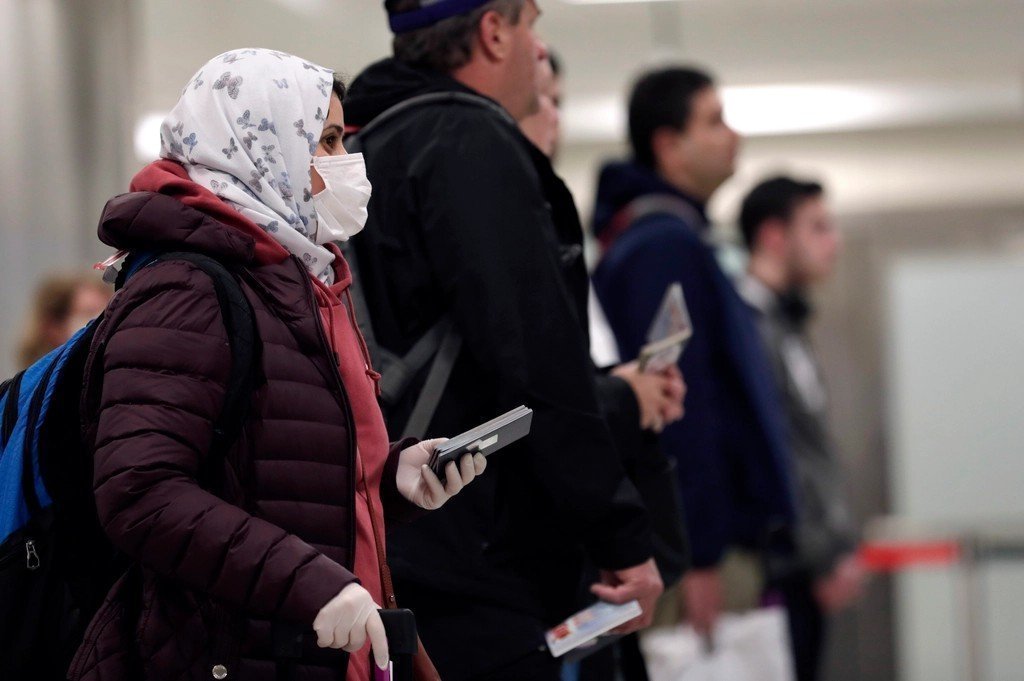
An estimated 1.52 billion international tourists were recorded around the world in 2025, almost 60 million more than in 2024 – and 2025 marks a new record year for international tourist arrivals in the post-pandemic era. That is an almost staggering number to wrap your head around. Think of it like this: roughly one in every five people on Earth crossed an international border as a tourist last year.
Travel demand remained solid in 2025 despite inflation in tourism services and geopolitical challenges, though it softened somewhat towards the end of the year. The resilience of travel demand, even in the face of real-world turbulence, says something profound about the human desire to move, explore, and connect. International tourism is expected to grow another three to four percent in 2026 compared to 2025, assuming Asia and the Pacific continue to recover, global economic conditions remain favorable, and geopolitical conflicts do not escalate.
How Mega Sporting Events Rewrite the Seasonal Calendar

Here’s the thing about major sporting events – they don’t just bring tourists, they fundamentally rewire the entire seasonal demand pattern of the destinations they touch. According to Mastercard Economics Institute analysis, Munich ranked as the topmost trending global tourist destination from June through August 2024, with the largest increase in tourism demand heading into the summer relative to normal levels, driven by hosting the opening game of the European Championship in football. A single match can turn an entire city’s seasonality upside down.
A full sixty percent of global respondents plan to book a trip around entertainment events, or plan on taking at least one trip for a sporting event in 2025, reinforcing that traveling for experiences continues to be a driving force. That is not a niche trend anymore. That is mainstream traveler behavior. Sports tourism has become one of the most resilient drivers of travel demand in recent years, from the Olympics to Taylor Swift’s Eras Tour.
The FIFA World Cup 2026: A Once-in-a-Generation Seasonal Disruption

The 2026 FIFA World Cup is already reshaping travel across the United States, Canada, and Mexico, with forecasts of record visitor numbers, new routes, and soaring hotel demand. This is not hype. The 2026 tournament will be the biggest FIFA World Cup in history, featuring 48 teams and 104 matches spread across 16 cities in three countries. Nothing like it has ever been attempted before at this geographic scale.
After a challenging 2025 for international overnight travel to the United States, with a decline of 6.3 percent, inbound tourism is expected to rebound by 3.7 percent in 2026, with nearly one-third of this growth linked to the tournament. The peak of arrivals is expected in June, when 57 of the 78 United States matches will take place, representing a ten percent increase in international arrivals compared to the previous year. Entire summer seasons in affected cities will look nothing like what hoteliers and airlines typically plan for. Early travel planning data from Expedia shows that the 2026 North American soccer tournament is already driving a 125 percent surge in searches for travel to the United States, Canada, and Mexico.
Concert Tours and Entertainment Events: The New Seasonal Wildcards

Honestly, if you had told travel economists a decade ago that a pop concert tour would move hotel markets and reshape city-level travel calendars, they might have smiled politely and changed the subject. But here we are. Searches for Houston surged over 620 percent during Beyoncé’s Cowboy Carter Tour dates in June 2025, while Manchester, United Kingdom searches surged 500 percent during Oasis concert dates in July.
Nontravel spending during 2024 Carnival in Rio de Janeiro increased by 156 percent compared to nonevent levels, according to the Mastercard Economics Institute. During the United States solar eclipse in 2024, there was a 71 percent increase in spending at hotels within the path of totality. These are not incidental bumps in occupancy. They are proof that one-off cultural and entertainment events can create entirely artificial peak seasons in cities that would otherwise be experiencing quiet mid-week, mid-season demand. Fandom travel has fueled the rise of “star chasers,” travelers who pursue their favorite artists and athletes by attending concerts and sporting events, often traveling great distances to be immersed in the action.
Climate Change: Quietly Dismantling the Old Rules of Seasonality

Peak summer used to mean beach destinations. That assumption is cracking. According to the European Union’s climate change monitoring service, 2024 marked the warmest Northern Hemisphere summer since records began, with Croatian authorities reporting the Adriatic Sea hit its highest-ever recorded temperature near Dubrovnik, while Greece continued to fight wildfires. When your dream destination is literally on fire, you rethink your July plans quickly.
Forty-five percent of travel advisors from Virtuoso say their clients are adjusting plans due to climate change, and of those, 76 percent report increased interest in shoulder-season or off-peak travel, while 75 percent say clients prefer destinations with moderate weather. Increasing heatwaves, floods, and storms are influencing destination choices, and the trend of “coolcationing” – traveling to cooler destinations – is gaining popularity alongside a growing interest in sustainable tourism. The shoulder season is no longer just a budget strategy. It has become a comfort and safety strategy too. Roughly 40 percent of Europeans now worry about natural disasters during their trips, nearly double the 2022 figure.
Geopolitical Tensions and How Conflicts Redirect Global Travel Flows

Conflict zones such as Russia-Ukraine and some regions in the Middle East are prompting airlines to reassess and modify their established flight paths, with frequent airspace closures forcing airlines to adopt longer, costlier routes – for instance, most European airlines now avoid Russian airspace, adding hours to Asia-bound flights. This is not abstract geopolitics. This is the reality of how war literally changes the physical path of a plane in the sky.
Among travelers factoring political climate into their destination choices, the United States now ranks among the top five countries that travelers could avoid due to political climate, with 17 out of 23 surveyed countries citing it in 2025, up from only 8 countries in 2024. That is a remarkable shift in perception in just one year. Geopolitics, currency moves, and extreme weather are increasingly playing into tourists’ considerations for their next vacation and affecting classic holiday destinations. The result? Travel demand is redistributed, not destroyed, shifting into new seasonal windows and alternate destinations.
The Rise of Shoulder Season Travel as a Structural Trend

British Airways Holidays reported that between 2023 and 2024, searches for travel in May and June increased twice as much compared to searches for travel in July and August, while 45 percent of those surveyed said they were more likely to travel off-peak in 2025. That is a serious structural shift, not a blip. The European Travel Commission, which has reported increases in off-season travel since 2022, noted that 73 percent of Europeans plan to travel between October 2024 and March 2025, up six percent compared to the same period the previous year.
The global travel landscape is evolving against a backdrop of geopolitical uncertainty, rising costs, and climate pressures, and these factors are increasingly influencing where people go and how they plan their trips, giving rise to trends like “coolcations” and shoulder-season travel. Remote work is accelerating this too. Corporate travel trends show that in 2025, roughly 39 percent of remote-capable workers took longer trips, up from 31 percent in 2024, reflecting a continued shift toward extended travel. When you can work from anywhere, the idea of traveling only in the frantic summer window loses its grip.
Asia’s Policy Decisions and Their Dramatic Effect on Regional Seasonality

It is hard to say for sure just how quickly a visa policy change can flip tourism flows – but the data from Asia in recent years is borderline shocking. Malaysia and Singapore teamed up with China on a reciprocal visa waiver agreement, which sparked a 150 percent jump in tourist arrivals in just the first half of 2024. One policy decision. One hundred and fifty percent. That is not a seasonal shift, that is a seasonal reinvention.
Japan has experienced a surge of travelers visiting the country, welcoming 3,081,600 visitors from abroad in March 2024 – the highest level ever – and it was not even the peak of the travel season yet. Destinations reporting data through November 2025 also saw strong growth, including Bhutan at 30 percent, Iceland at 29 percent, and Japan at 17 percent. When governments actively court tourists through streamlined access, they effectively extend the season and redistribute demand across the calendar rather than concentrating it in traditional peak months. Increased air connectivity and enhanced visa facilitation also supported international travel growth broadly in 2025.
Economic Uncertainty and Its Ripple Effect on When People Choose to Travel

While travel demand has proved resilient, the macroeconomic and geopolitical landscape defined by economic uncertainty, high inflation, energy prices, increased interest rates, and conflicts from Ukraine to the Middle East has nevertheless exacerbated the sector’s difficult operating conditions and may yet dampen sector growth. Let’s be real – when household budgets are squeezed, the first thing to shift is not whether people travel, but when and how they travel.
Building on seasonal patterns seen in 2024, 2025 showed an even stronger shift toward near-term trip planning, with travelers increasingly searching for last-minute spring and summer getaways, including a 20 percent quarter-over-quarter increase in the zero to thirteen-day planning window, with international searches showing an even stronger 30 percent increase. This last-minute behavior is itself a seasonal signal. When consumers feel economically uncertain, they compress their booking windows dramatically, making previously predictable peak seasons harder for the industry to anticipate and plan for. While headline inflation has receded globally in 2025, inflation in tourism-related services remains elevated by historical standards, and tourists are expected to continue seeking value for money.
The Long-Term Legacy: How Events Permanently Alter Destination Seasonality
Major global events do not just create temporary spikes in travel demand. Done well, they permanently reposition destinations and lengthen their effective travel seasons. The long-term value of large-scale sporting events lies not only in visitor numbers but in their ability to transform global destination perception, with post-event experiences in cities such as London and Paris demonstrating how hosting major sporting events can reposition destinations within culture, gastronomy, and lifestyle-driven travel markets.
The United States, Canada, and Mexico still stand to gain significantly from international exposure, infrastructure upgrades, and long-term tourism growth from the World Cup, and even if immediate hotel occupancy falls short of projections, the tournament’s global spotlight is expected to drive future travel interest. International tourism is expected to grow three to four percent in 2026, assuming Asia and the Pacific continue to recover, global economic conditions remain favorable, tourism service inflation continues to decline, and geopolitical conflicts do not escalate. The future of international travel seasonality is not fixed. It bends and shifts with every major global event – a reminder that the calendar of tourism is ultimately written by the world itself, not just by the weather.
What destination would you have expected to rise or fall next on the global travel map, and did the reason surprise you? Tell us in the comments.