

Portugal has been sold to the world as a golden ticket. Sunshine, cheap wine, cobblestone streets, and, for a long time, a tax regime so generous it almost seemed too good to be true. Thousands of expats packed their bags, uploaded their lease agreements to immigration portals, and told their friends back home they had cracked the code.
The thing is, for many of them, the reality turned out to be a lot messier than the Instagram highlight reel. The tax breaks were real, but so were the trade-offs. The lifestyle was beautiful, but the bureaucratic headaches, the soaring rents, the hostile locals, and the fine print of those tax rules? Nobody put those in the YouTube vlog. So here is what the relocation influencers left out. Let’s dive in.
1. The NHR Tax Regime You Heard About? It’s Gone

Let’s start with the headline that caught everyone’s attention in the first place. Portugal’s Non-Habitual Resident (NHR) regime, launched in 2009, offered expats the opportunity to live and work under a highly favourable tax regime, providing significant relief on both Portuguese and foreign-sourced income for a fixed, non-renewable period of ten years. It was a dream setup, and word spread fast.
The NHR was officially terminated in January 2024, with new applications no longer accepted after 31 March 2024. Honestly, if you only recently started researching a move to Portugal, you missed the train entirely. As of 1 April 2025, the original NHR regime is no longer open to new applicants. It has been replaced by a new NHR 2.0 Portugal in 2025.
The fiscal cost of maintaining NHR became substantial. The annual budgetary expenditure linked to NHR tax exemptions exceeded €1.7 billion in 2024, the highest level since the regime’s creation. Rising property prices and mounting tax losses fuelled political debate. In other words, it was a victim of its own success.
2. The Replacement Regime Is Far More Restrictive

When people hear “NHR 2.0,” they often assume it’s more or less the same deal with a fresh coat of paint. It’s not. NHR 2.0, officially the Tax Incentive for Scientific Research and Innovation (IFICI), is more selective. The government has shifted focus from attracting anyone seeking tax relief to drawing in highly-skilled individuals who can contribute directly to the country’s strategic sectors.
IFICI offers a 20% flat tax rate on eligible Portuguese income and relief from double taxation for certain foreign-sourced income, but only for highly qualified professionals in innovation-driven fields. Eligibility is limited to new tax residents who have not lived in Portugal in the previous 5 years. Applicants must hold a university degree, EQF Level 6+ or PhD and work in sectors such as science, technology, healthcare, green energy or R&D.
Pensions, however, are the one major exception. They’re no longer covered under any special flat-rate or exemption regime and are taxed at standard Portuguese tax rates. This hit retirees especially hard. Many who planned their move around a flat pension tax rate found the rules had changed before they even unpacked their boxes.
3. Retirees Got the Worst of the Deal

Here is where things get particularly painful for a specific group. Retirees were arguably the biggest winners under the old NHR. Retirees could benefit from NHR status, as retirement pensions received from abroad were taxed at a flat rate of 10 percent under the NHR tax regime. This could provide significant tax savings for retirees, particularly those from countries with high tax rates on pension income. That was a compelling reason to make the move.
Pension income is no longer a qualifying category under NHR 2.0. Retirees who secured NHR before 2024 keep their favourable 10% pension tax rate, but newcomers will need to rely on double taxation treaties and other planning strategies. So if you’re a retiree considering Portugal right now, your financial planning just got significantly more complicated.
The standard Portuguese income tax can reach levels that would shock anyone used to hearing about a 10% flat rate. Portugal’s standard tax rates can reach up to 58.2%. That’s not a typo. For those who move without the protection of a favourable regime, the tax exposure is very real.
4. Housing Costs Have Exploded Beyond Recognition

You know how Portugal used to be that quiet secret, where you could rent a gorgeous apartment in Lisbon for next to nothing? Those days are genuinely over, and the numbers are staggering. The price of housing per square metre has surpassed €2,000 in Portugal for the first time ever, according to data released by the National Statistics Institute (INE). The Lisbon region remains the most expensive in the country.
Among European Union members, Portugal is the country that is witnessing the steepest increase in house prices, according to Eurostat. In the second quarter of 2025, prices rose by 17.2% year-on-year. That’s not gradual gentrification. That’s a market in full sprint. House prices more than doubled (141%) in Portugal between 2010 and 2025.
Lisbon rents climbed more than 35% between early 2023 and mid-2025, according to Idealista, while short-supply suburbs such as Oeiras and Almada posted similar hikes. For newcomers paid in foreign currency that may still look cheap, but local incomes have risen far slower, and the mismatch is fuelling an increasingly hostile mood.
5. Locals Are Not Always Rolling Out the Welcome Mat
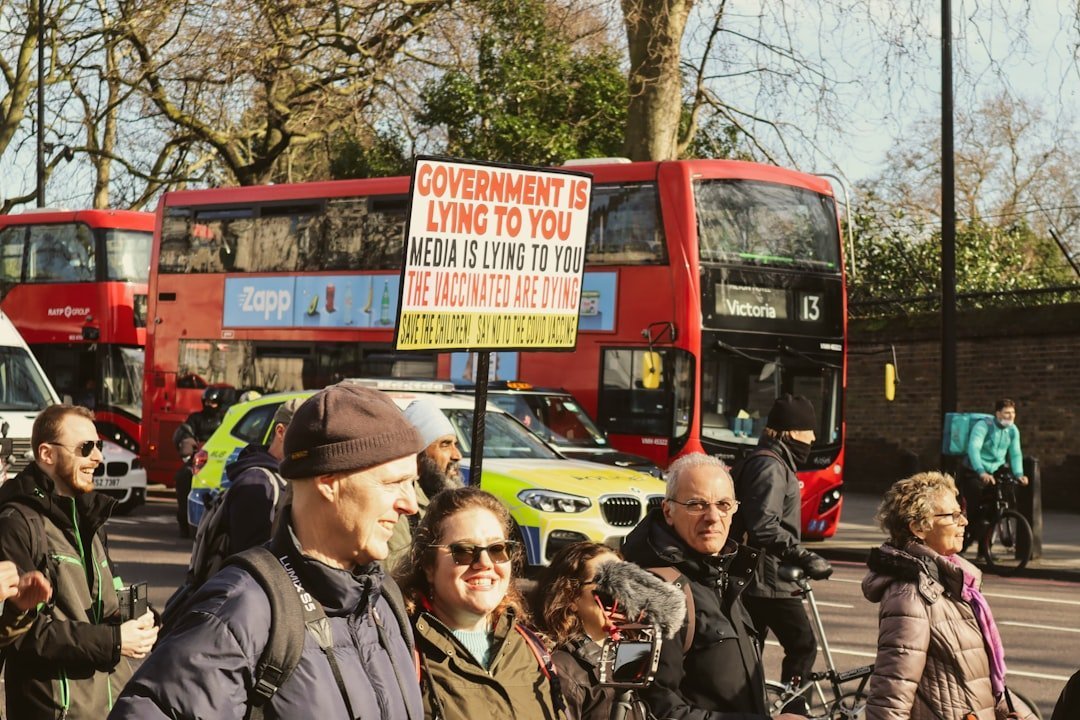
Let’s be real about the social climate. The expat-versus-local tension in Portugal has been building for years, and it boiled over visibly in 2024. In 2024, thousands protested against tourists and not the government. The anger was real, and it was partly directed at the very wave of wealthy foreign arrivals that the tax incentives helped attract.
In 2023, 1 in 3 homes in Lisbon were sold to foreigners, and in 2024, a third of the historical city centre sat unoccupied. That statistic tells the whole story in a single sentence. Foreign money flowed in, properties went empty, and the people who grew up in those neighbourhoods were quietly priced out.
Between 2012 and 2022, housing prices rose by more than 250% while wages remained largely stagnant. When you show up as an expat with a foreign salary, you are not just moving to a new country. For many locals, you represent a structural problem that has been building for over a decade. That can be a heavy thing to sit with over a coffee in the morning.
6. The Bureaucracy Will Test Your Patience to Its Absolute Limit

Portugal is a beautiful country. It is also a country where getting a simple document processed can feel like navigating a labyrinth designed by someone who enjoys watching people suffer. The immigration agency AIMA, which replaced the old SEF, has been overwhelmed from day one. Major administrative delays persisted even after the public health emergency ended. These delays were due to the dissolution of SEF, the transfer of immigration responsibilities to AIMA, and a backlog of over 500,000 cases.
Current renewal challenges include limited appointment availability, document processing delays, rapidly changing procedures, and language barriers. It’s hard to say for sure exactly how long your paperwork might take, but reports in the expat community regularly describe waits measured in many months, sometimes longer. The immigrant population grew from 400,000 in 2017 to 1.1 million in 2024, meaning a rise from 4% to 15% of the total population. This rapid growth created big administrative problems.
The government has at least acknowledged the crisis. The government’s primary goal in reforming Portugal’s law for foreigners is to reduce bureaucracy. The process for first-time residence permit applications and renewals for specific categories is being streamlined, aiming for more efficiency and digital interaction. Whether that actually translates to a smoother experience in practice is another question entirely.
7. Immigration Rules Keep Shifting Under Your Feet

Moving to a country is stressful enough. Moving to a country that seems to rewrite its immigration rulebook every few months is something else. Between December 2024 and September 2025, Portugal advanced a package of legislative and administrative measures that substantially changed the legal framework for entry, stay, and acquisition of nationality. If you are not paying close attention, the ground can shift without warning.
Legislative reforms introduced throughout 2024 and 2025 abolished popular programs like the Manifestation of Interest mechanism, while tightening family reunion rules and extending citizenship timelines. That Manifestation of Interest pathway was genuinely useful for people who arrived without everything lined up perfectly. It’s gone now. The old manifestação de interesse system has been repealed, introducing a new, more structured regime for residence, work, and family reunification.
Even the rules around citizenship have been tightened. A government proposal in June 2025 aimed to tighten nationality acquisition rules, including longer residence requirements and integration testing. If your long-term plan involved eventually getting a Portuguese passport, pencil in a longer timeline than you originally expected.
8. The “Cheap” Cost of Living Has a Very Specific Asterisk

Portugal is still, in a relative sense, more affordable than much of Western Europe. That’s true. Compared to other European countries, monthly expenses are roughly 39.63% cheaper than in the UK, 45.48% cheaper than in Germany, and 55.58% cheaper than in France. Those are meaningful numbers, and they should not be dismissed.
However, the picture is more complicated when you zoom in. Food prices grew by 4.0%, the sharpest increase since October 2023. And in 2024, rents in Lisbon increased by more than 8% and in Braga by over 11%. The affordability advantage is being eroded, and it’s being eroded quickly in the cities where most expats actually want to live.
Think of it like a sale at a high-end store. Yes, everything is technically discounted compared to the original price, but if the original price keeps going up, the discount doesn’t mean what it once did. In the Cost of Living 2024 report published by consulting firm Mercer, Lisbon ranked 100th among the most expensive cities for expats worldwide and 38th in Europe. That is not exactly obscure, unnoticed territory anymore.
9. Tourism Pressure Is Reshaping the Country You Moved To

Part of what made Portugal magical was precisely its unspoiled quality. The sense that it had avoided the fate of, say, Barcelona or Dubrovnik. That window may be closing fast. Tourism makes up nearly 20% of Portugal’s GDP, a higher share than even Spain or France. In 2024, a country of 10 million hosted around 18 million tourists. That boom created jobs, but mostly low-paid, seasonal ones.
The character of Lisbon’s historic neighbourhoods has transformed dramatically. When a neighbourhood fills with short-term rentals and tourist-facing businesses, the lived experience changes, even for expats who chose the city partly for its authentic local culture. According to the National Registry of Local Accommodation, in September 2024 there were 120,034 short-term rental registrations in Portugal, representing less than 2% of all traditional accommodation. Yet their concentration in the most desirable urban areas amplifies their impact significantly.
The short-term rental market and tourism pressure are also contributing to housing scarcity. Only 26,000 new units are constructed annually, far below the 45,000 to 48,000 demographic analysts calculate are needed. Yet 723,000 properties remain vacant. It’s a paradox that captures the dysfunction of the current market perfectly.
10. The “Portugal Dream” Has a Serious Image Management Problem

Social media and relocation bloggers have built a very specific version of the Portugal story. Sunsets over the Tagus, affordable petiscos, 300 days of sunshine, and a life free from crushing tax bills. That version exists, and it isn’t fake, but it’s dramatically incomplete. Some observers jokingly compare Lisbon to major U.S. cities like Seattle, San Francisco, or Los Angeles, but with salaries closer to those in third-world countries. That joke has a sharp edge of truth to it.
Immigrants from higher-income countries often earn more money and usually unintentionally become gentrifiers while living in lower-income destinations. This is something that the glossy relocation content rarely addresses with any honesty. The impact of high-income expats on local communities is real, and increasingly, locals are not shy about expressing their frustration with it.
The gap between the promise and the reality has become so visible that it’s now part of Portugal’s political conversation. Portugal’s immigration laws are changing, thanks to rising political pressure and widespread dissatisfaction with housing costs. The country is actively recalibrating who it wants to attract, and the era of the broadly welcoming, tax-break-for-everyone approach is definitively over.
11. The NHR 2.0 Can Still Work – But Only If You Qualify

Despite everything above, Portugal has not fully slammed the door on tax-advantaged living. It has simply narrowed it considerably. The new IFICI regime sets out a straightforward universal exemption: all foreign source income is exempt except for pensions and income paid or made available by entities located in blacklisted jurisdictions. That is still a powerful benefit for the right profile of person.
Digital nomads and consultants can gain the most from NHR 2.0, especially if their work is for non-Portuguese clients. Income from abroad may qualify for exemption in Portugal if sourced correctly. Contracts and invoices should clearly establish the foreign source of income to avoid it being classified as Portuguese-sourced. Remote workers in eligible professions such as IT, research, and consulting can combine the 20% flat rate for local work with full exemption on foreign earnings.
If all conditions are satisfied initially and on an ongoing basis, the taxpayer is deemed to be eligible for the IFICI for up to ten consecutive years. That’s still a decade of reduced tax exposure, and for the right professional in the right sector, Portugal remains a genuinely compelling option. The key word is “right.” The era of Portugal as a tax haven for almost everyone has passed.
The Real Takeaway Before You Book That Flight

Portugal is still a remarkable country. The food is extraordinary, the climate is enviable, the safety record is impressive, and there is a genuine warmth in everyday life that is hard to replicate elsewhere in Europe. None of that has changed. What has changed is the calculation around moving there purely for financial reasons.
The expat trap isn’t Portugal itself. It’s the simplified, curated version of Portugal that gets sold online, the one where the tax breaks always work, the apartments are always affordable, and the locals always smile. That version is a selective truth at best. The full picture requires accounting for a disappearing tax regime, an overheated property market, an overloaded immigration system, and a social contract that is visibly straining under the pressure of rapid foreign-driven change.
If Portugal is calling you because you genuinely love the country, the culture, and the way of life, then go. Go with open eyes, a qualified tax adviser, and a realistic budget. But if you’re primarily chasing a tax regime that was the talk of the internet a few years ago, know that the version you read about is largely no longer available.
What would you have done differently if you’d known all this upfront? Drop your thoughts in the comments.