

There’s a particular kind of discomfort that settles in when you realize people around you are noticing your behavior – and not in a good way. Nobody says a word. Nobody points. Nobody confronts you. They just… look. That is the reality millions of Americans face every single year when they land in Europe with habits so deeply ingrained back home that they never once stopped to question them.
In 2024 alone, over 107 million Americans traveled abroad, and four of America’s top five most visited locations are in Europe, accounting for over 17 million visits each year. That is a staggering number of people carrying American customs into cultures that quietly operate by a completely different rulebook. So what exactly is triggering those subtle European side glances? Let’s dive in.
1. Speaking at Full Volume in Public Spaces
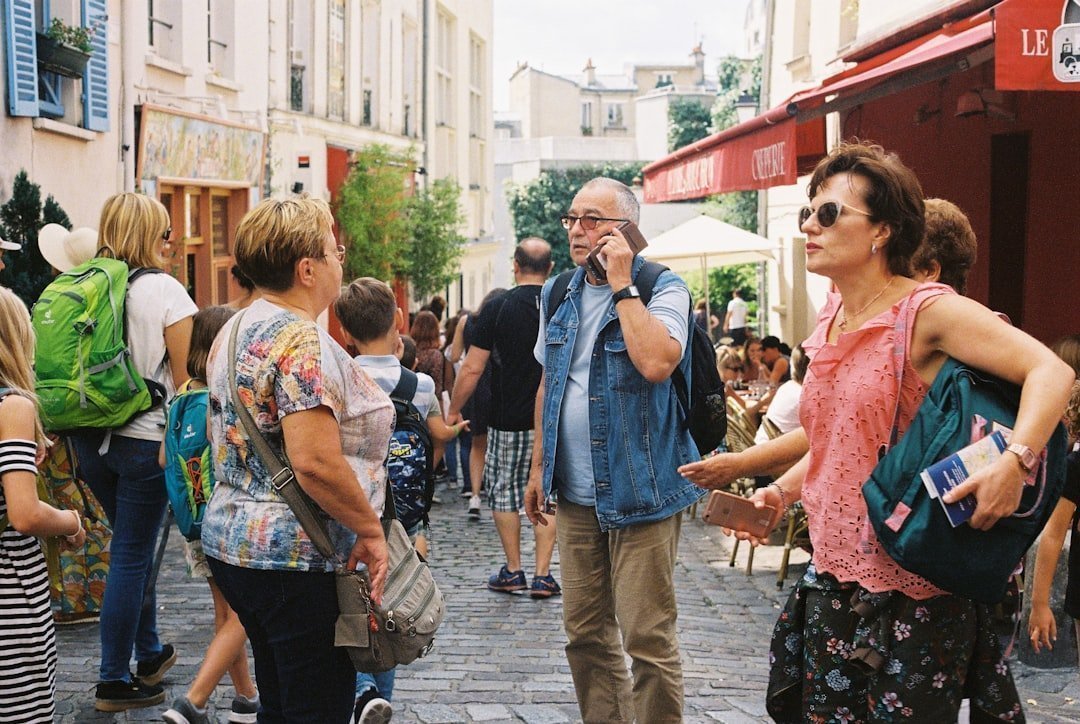
One of the most common things Europeans silently judge is loud behavior, especially from American tourists. In many European countries, public conversations are kept quiet, especially in indoor settings. Think of it like an unwritten library rule that applies to trains, cafes, museums, and pretty much everywhere else.
Loud FaceTime calls with speakerphone blaring, oversized laughter, and personal storytelling on trains and buses disrupts the “shared quiet space” etiquette that London, Berlin, Seoul, and Tokyo residents hold sacred. Commuters in these cities consistently cite loud American phone habits as major sources of transit stress. These cultures treat public transit like library reading rooms where everyone deserves peaceful passage.
Americans tend to speak louder in public places such as restaurants, markets, cathedrals, and museums. When traveling in Europe, you’ll want to turn down the volume considerably. Honestly, the fix is simpler than it sounds. Match the room’s energy. If the train is dead quiet, that’s your cue.
2. Over-Tipping (or Tipping the Wrong Way)

Here’s the thing – Americans tip generously because back home, tipping is practically a moral obligation. U.S. travelers tend to bring along their not-so-subtle tipping habits, which inadvertently mark them as a tourist faster than asking for ice water with every meal. Unlike in the U.S., where tipping 20 to 25 percent is standard and sometimes expected, most European countries operate under a whole different set of rules around gratuity.
In most European countries, the restaurant experience differs fundamentally from the American system. Service charges are typically included in menu prices, and staff usually receive proper wages rather than relying on tips to make up their income. This means tipping is considered a bonus for exceptional service rather than an obligation.
While Americans tend to tip generously, it can feel over-the-top or even awkward in countries where tipping is minimal or service charges are included. Locals may interpret this as a lack of understanding or an attempt to show off, which can create an uncomfortable dynamic – even if intentions are good.
3. Wearing Gym Clothes and Flip-Flops Everywhere

Let’s be real – the American travel uniform of athletic shorts, a college hoodie, and foam sandals is comfortable. Nobody’s disputing that. But comfort comes at a cultural cost in Europe. Your “vacation uniform” might be comfortable, but strolling around Paris in gym shorts or wearing flip-flops to a fancy restaurant signals you didn’t get the memo on local fashion norms.
It’s a cultural norm in Europe to dress up, whether you’re headed to work or to meet a friend at a café. When packing for your European vacation, pack formal attire, such as dress pants, blouses, button-downs, and dresses. Keep the jeans and t-shirts to a minimum, especially in Italy.
If you’re hoping to avoid being an annoying tourist while visiting Europe, one of the first things to keep in mind is your overall demeanor and appearance. According to travel expert Rick Steves, Europeans can easily spot American tourists thanks to certain behaviors that instantly mark them as outsiders. Clothing is a huge part of that instant recognition.
4. Making Extensive Meal Substitutions and Custom Orders

Americans love customizing their food. Extra dressing on the side. No onions. Can we get that sauce on a separate plate? It’s so normal at home that most people don’t even think twice about it. In Europe, though, this behavior reads very differently.
Making substitutions, requesting ingredient removals, or complaining that dishes don’t match personal preferences reads as deeply disrespectful in France, Italy, and much of Asia, where chefs view their dishes as complete artistic expressions.
American menus often treat “have it your way” as gospel. In many European countries, the kitchen is presenting its idea of a dish. Sending it back because it’s not what you imagined – or because you’d prefer substitutions – can read as disrespectful of the chef and the culture’s food logic. Allergies and real mistakes are one thing; asking to swap half the dish is quite another.
5. Jumping Straight Into English Without Trying

Imagine someone walking into your home and immediately expecting you to speak their language without so much as a “hello” in yours. That’s roughly how it feels to Europeans when Americans skip any local-language attempt entirely. Although many people in European countries speak English, you don’t want to assume everyone speaks English. It’s always courteous to ask if the person speaks English, rather than presuming they do.
In many European countries, privacy, understatement, and subtlety are valued over openness and overt friendliness. Asking strangers personal questions or talking loudly in a phone can signal cultural insensitivity immediately. Even the smallest effort – a “bonjour,” a “grazie,” a “guten Tag” – changes the entire dynamic of how locals perceive you.
6. Asking Deeply Personal Questions Too Quickly

In America, small talk with a stranger often includes questions like: “What do you do for work?” or “Are you married?” or “Where are you from?” It’s friendly. It shows interest. In most of Europe, however, it’s treated more like an interrogation than a conversation.
Questions like “What do you do?” “Where are you from?” or “Are you married?” within minutes of meeting someone is standard American small talk but reads as invasive interrogation in France, Germany, and much of Asia.
Some Americans might feel like they’re being judged for habits that come from genuine good intentions. Being too casual, personal, or touchy with strangers can be seen as intrusive, not friendly. Europeans tend to build trust gradually – think of it as a slow simmer rather than a microwave relationship.
7. Expecting Fast and Attentive Table Service

One of the most consistent complaints from Americans dining in Europe is that the service feels “slow” or “inattentive.” The server didn’t check back three times. The bill wasn’t brought to the table the moment the last fork was set down. From an American perspective, that’s poor service. From a European perspective, that’s respect.
Waitstaff in Europe doesn’t work for tips. Therefore, they’re not concerned with turnover and won’t check in on you as often as you may be used to. European staff is more focused on doing a good job and ensuring you are having a positive experience, so you can sit back, relax, and enjoy your meal without rushing. You will need to ask for the bill when you’re finished and ready to pay. It is considered rude to rush you by bringing the bill to you if you haven’t requested it.
The table is yours for as long as you want it. That’s not laziness on the server’s part. That’s hospitality done the European way. A rushed exit is seen as an insult to the meal itself.
8. Eating While Walking
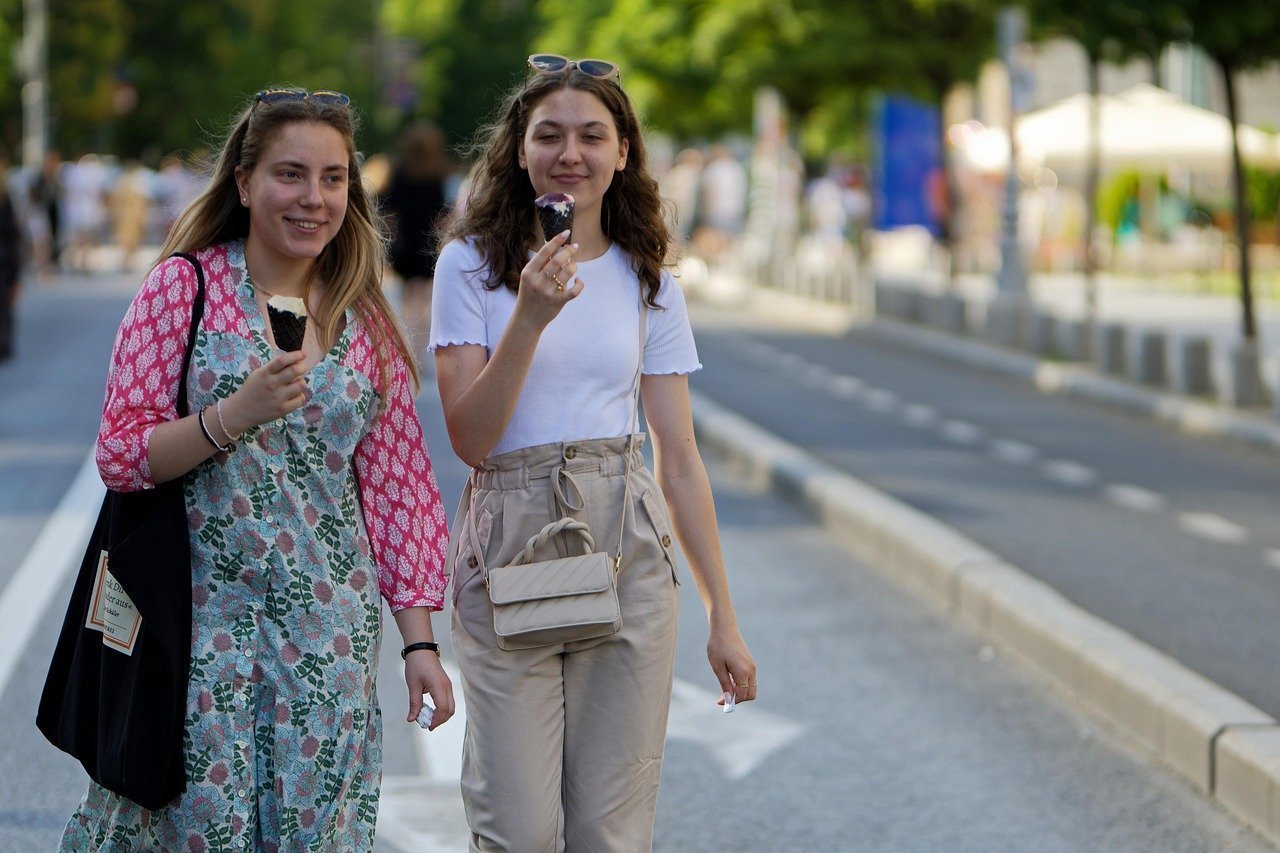
Americans are, in many ways, masters of multitasking – including eating on the move. Coffee in one hand, croissant in the other, walking at full speed through a cobblestone square. It feels efficient. In large parts of Europe, it feels disrespectful.
In parts of Italy and Spain, eating is a sit-down ritual; walking and munching signals you’re too busy to respect the food – or the sidewalk.
In much of Europe, people also prefer sitting down to eat. Travelers can avoid judgment by finishing food at a stall, bench, or café before moving along. It’s a simple adjustment, honestly. Find a bench. Sit. Taste the thing you bought. Enjoy it. That mindset alone will change how locals see you entirely.
9. Smiling at Every Stranger

This one surprises Americans almost every time they learn about it. Smiling at strangers feels harmless, warm, even virtuous. It’s one of the most quintessentially American social reflexes there is. In several European countries, though, it carries a completely different message.
Americans often smile at strangers as a sign of friendliness. In countries such as Russia, this gesture may confuse people, who reserve smiles for real friendships or genuine amusement. Smiling without reason can be seen as insincere or unusual. In Germany, a grin toward a stranger might even appear mocking.
Europeans tend to smile a lot less than Americans do. This doesn’t mean they’re unfriendly or unhappy – it just reflects different cultural norms around emotional expression. It’s not coldness. It’s authenticity, European style.
10. Ordering Drinks at the “Wrong” Time

Europeans can have very rigid ideas of what to drink and when. Ordering a latte at 3 PM or a cocktail before dinner might raise eyebrows in some circles. In France, wine pairs with meals; sweet or fruity cocktails are for aperitifs or after-dinner lounges.
This might sound a bit over the top to an American traveler who’s used to ordering whatever, whenever, but drinking rituals in Europe are genuinely cultural. In Italy, ordering a cappuccino after 11 AM is a bit like showing up to a formal dinner in a swimsuit. People notice.
Embrace the region’s typical drink rituals, like vermut in Spain before lunch. Honestly, learning to follow the local rhythm of eating and drinking is one of the most enjoyable parts of traveling in Europe. Let the culture lead. You might be surprised how much you love it.
Conclusion

None of these habits make Americans bad travelers. They make Americans human – products of a culture with its own set of deeply embedded norms that happen to clash, quietly and persistently, with European ones. What’s polite in one culture can come off as odd or overbearing in another. That’s not a character flaw. It’s just geography and history doing their thing.
The difference between being seen as an “ugly American” or a respectful visitor often comes down to awareness, observation, and willingness to adapt. Small changes in volume, punctuality, language effort, and cultural research can transform how you’re received abroad.
Travel is one of the most powerful ways to understand ourselves – not just other cultures. The next time you catch yourself reaching for that 20 percent tip, talking a little too loudly, or smiling at a stranger on a Berlin street corner, just pause for a second. Ask yourself: am I traveling in Europe, or am I just moving America to a new location? What do you think about it? Share your own travel stories in the comments.